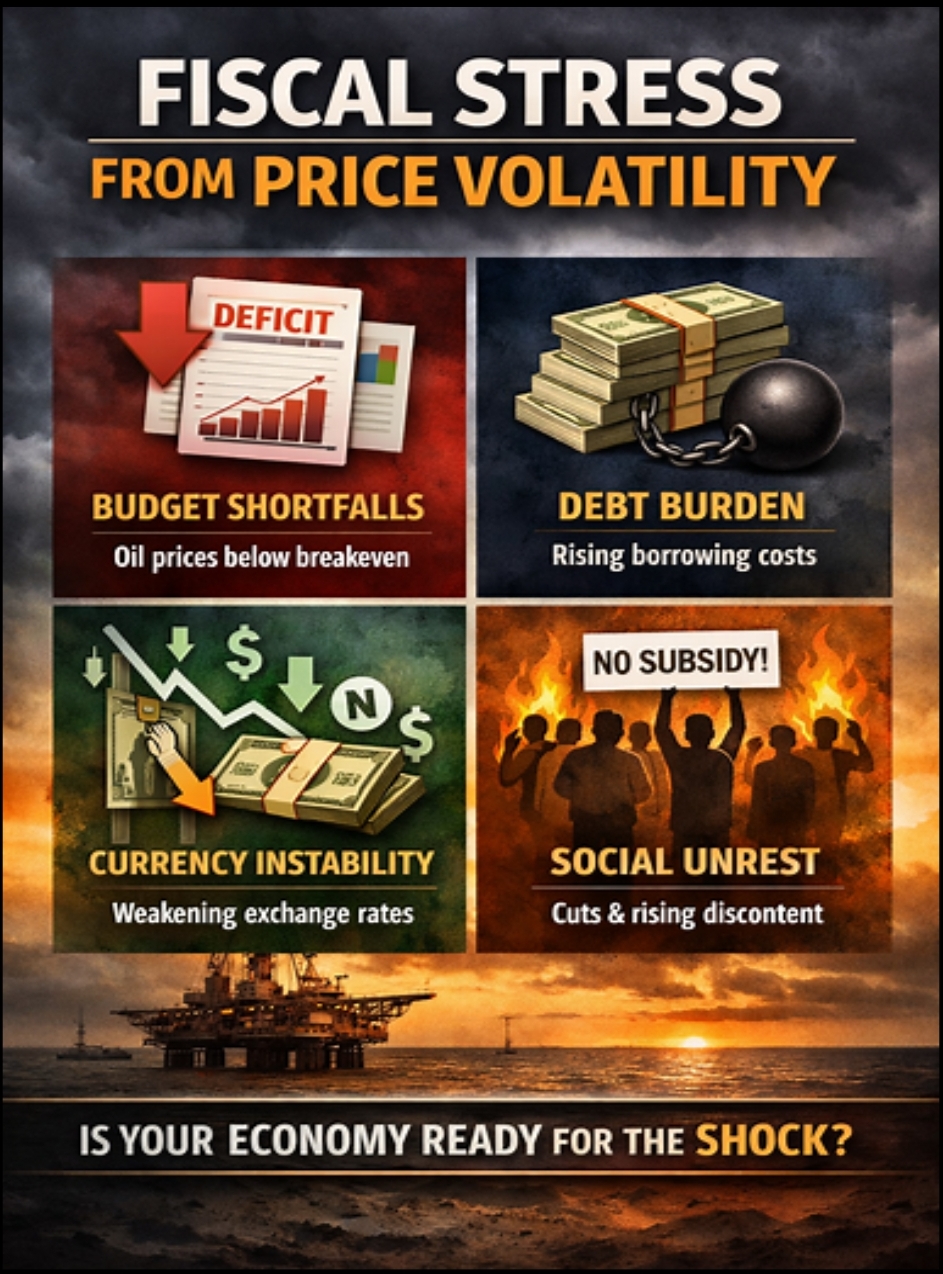
In oil-dependent economies, government budgets live and die by the barrel. When crude prices swing, fiscal stability swings with them making budget shortfalls emerge when prices fall below fiscal breakeven levels (Nigeria’s is around $75/bbl), debt pressures rise as governments borrow to plug gaps, often at higher costs, currency instability follows, with weaker exchange rates fuelling inflation. Social strain grows as subsidies and public spending are cut, leading to unrest among the citizenry.
Volatility doesn’t just disrupt markets, it destabilizes nations. The lesson it poses to government and the leaders in the energy industry is that resilience comes from diversification into gas, refining, renewables, and non-oil sectors. In Africa, projects like Nigeria’s Dangote refinery and LNG investments across Mozambique and Senegal are more than energy plays, they’re fiscal shock absorbers.
This raises a question for leaders in energy industry: How can African economies accelerate diversification to reduce vulnerability to oil price swings?
This visual diagram explains in summary how price fluctuations result in fiscal stress; Government needs to hedge, while energy players needs to thinks of ways to diversify to sustain profitability in their business during periods of fluctuations.