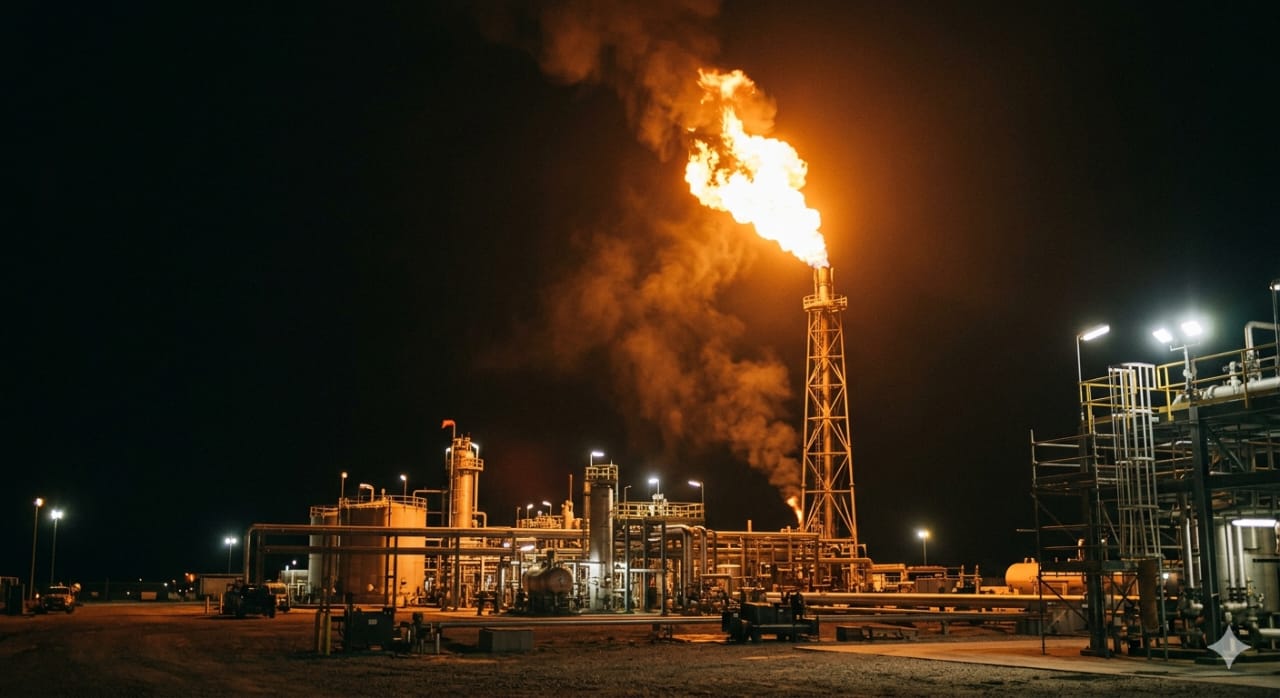
Nigeria possesses the largest proven oil reserves in Africa and ranks among the continent's top natural gas holders. Despite this resource endowment, the sector faces structural challenges that undermine national fiscal health. This analysis examines key issues including revenue volatility, subsidy regimes, gas utilization deficits, governance gaps, and energy transition risks.
Revenue Concentration and Volatility
The federal budget remains heavily dependent on petroleum exports, which account for approximately 90% of foreign exchange earnings and 60% of government revenue. This concentration creates acute fiscal vulnerability to global price fluctuations. The COVID-19 pandemic in 2020 triggered a revenue shortfall exceeding 40%, necessitating substantial domestic and external borrowing.
The Petroleum Industry Act (PIA) of 2021 introduced revised fiscal frameworks including hydrocarbon taxes and updated royalty structures. However, implementation delays and persistent regulatory uncertainty continue to constrain upstream investment. The Nigerian National Petroleum Company Limited (NNPCL), restructured under the PIA as a commercial entity, has yet to demonstrate full operational transparency.
Fuel Subsidy Burden
Petroleum product subsidies have represented a major fiscal drain. By 2022, subsidy costs consumed over 40% of government revenue. The 2023 removal, while fiscally necessary, generated significant inflationary pressure and remains politically sensitive. Annual savings potentially exceeding $10 billion require transparent redirection toward productive public investment to maintain political viability.
Gas Sector Underutilization
Despite proven gas reserves exceeding 200 trillion cubic feet, Nigeria flares approximately 1.5 billion cubic feet daily. This practice results in estimated annual revenue losses exceeding $1 billion. Infrastructure deficits, pipeline vandalism, and regulatory enforcement failures limit domestic utilization and LNG export expansion. The Nigeria LNG facility on Bonny Island provides a partial success model, but broader commercialization remains constrained.
Governance and Revenue Transparency
Revenue leakage persists through measurement discrepancies, transfer pricing, and crude theft. Extractive Industries Transparency Initiative (EITI) reports have documented systematic gaps between company payments and government receipts. The NNPCL's transition to commercial operations has not yet resolved concerns regarding board independence, financial reporting standards, and swap arrangement valuations.
Energy Transition Implications
Global decarbonization trends and capital reallocation away from fossil fuels present structural risks to Nigeria's fiscal model. International oil companies have divested assets to indigenous operators with limited technical capacity. Production has declined from over 2.5 million to below 1.5 million barrels per day. Renewable energy development, despite significant solar potential, remains underdeveloped. The sovereign wealth fund holds insufficient assets to offset prospective demand decline.
Conclusion
Nigeria's oil and gas sector exemplifies the resource curse phenomenon, where natural wealth undermines rather than supports fiscal sustainability. Legislative reforms provide a necessary but insufficient foundation for change. Effective transformation requires transparent revenue management, strategic subsidy reform, accelerated economic diversification, and enhanced governance capacity. The window for managed transition is narrowing as global energy markets evolve.